What does the Shields Lab study?
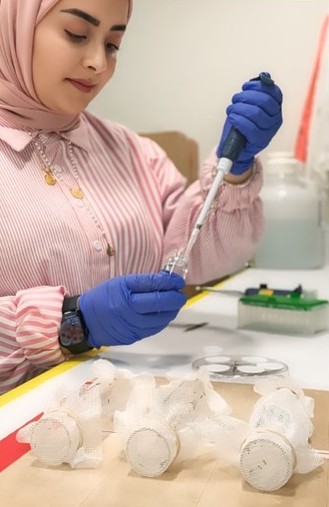
The Shields Lab at Towson University studies insect taste and smell: how insects detect plant compounds with sensory cells on their mouthparts and antennae, and how those signals steer feeding and avoidance. The lab also tests plant-derived repellents against insect pests, including spotted-wing drosophila and the house cricket.
What is spotted-wing drosophila?
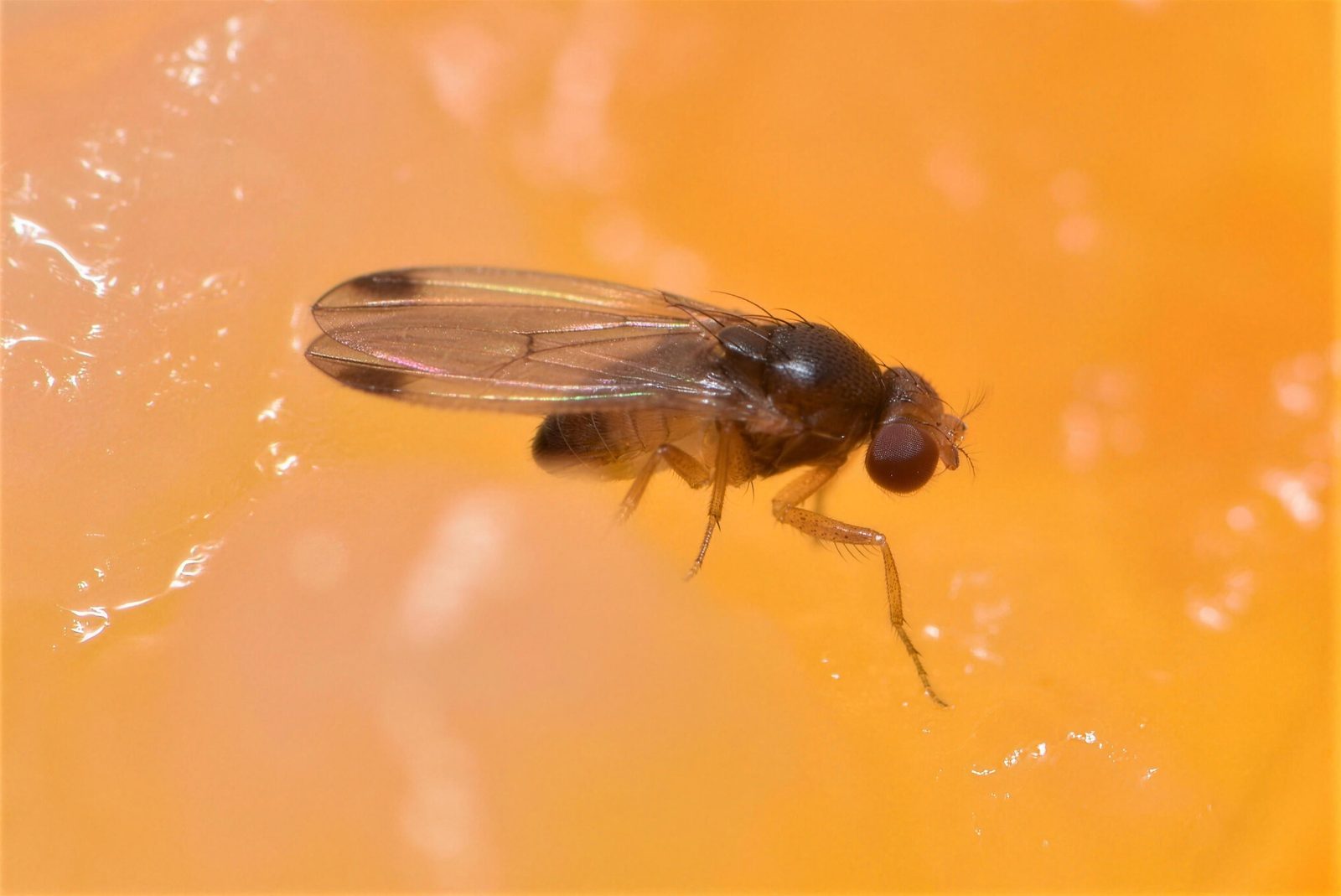
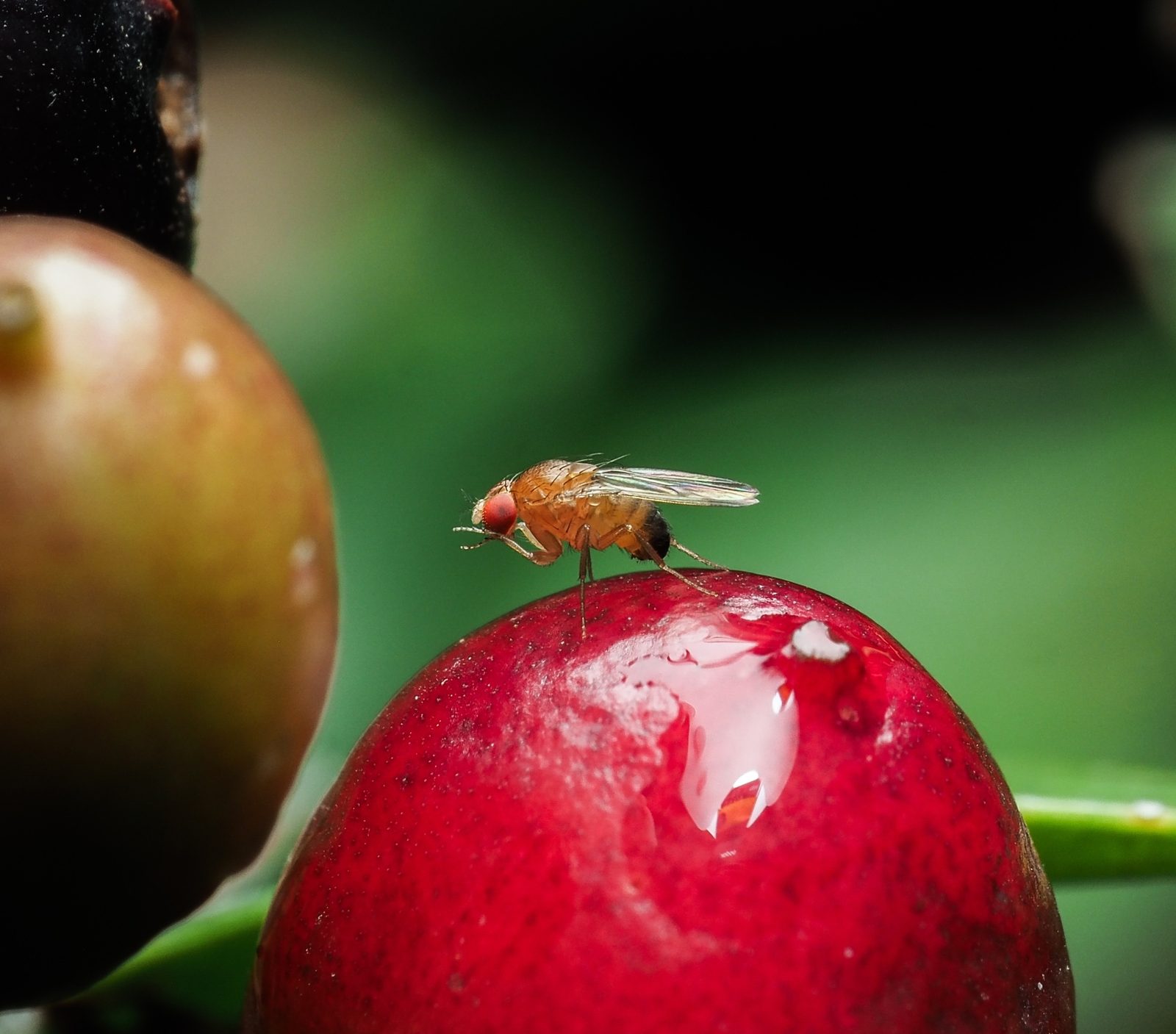
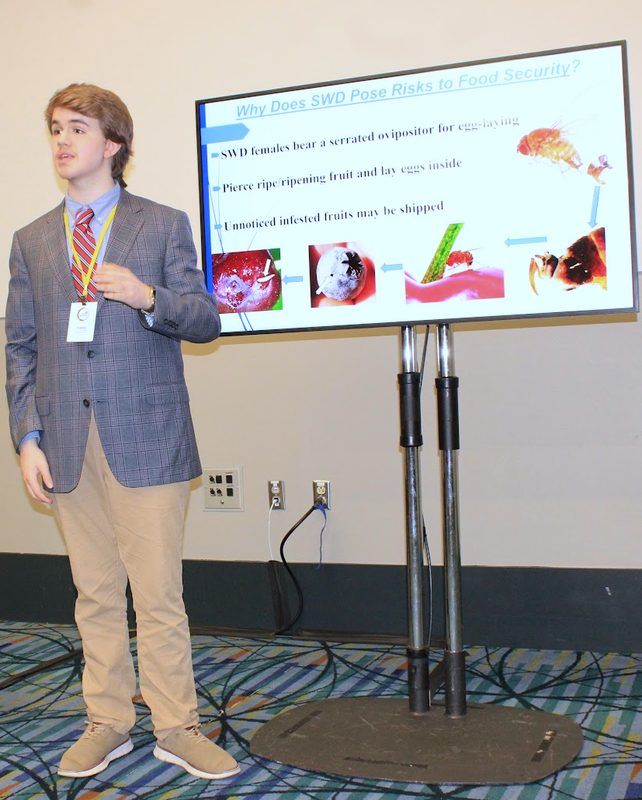
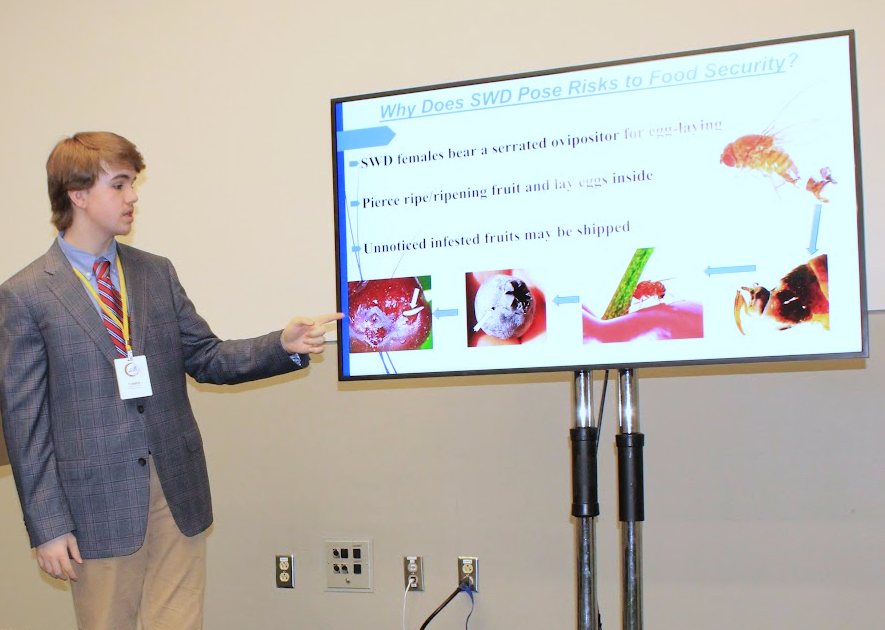
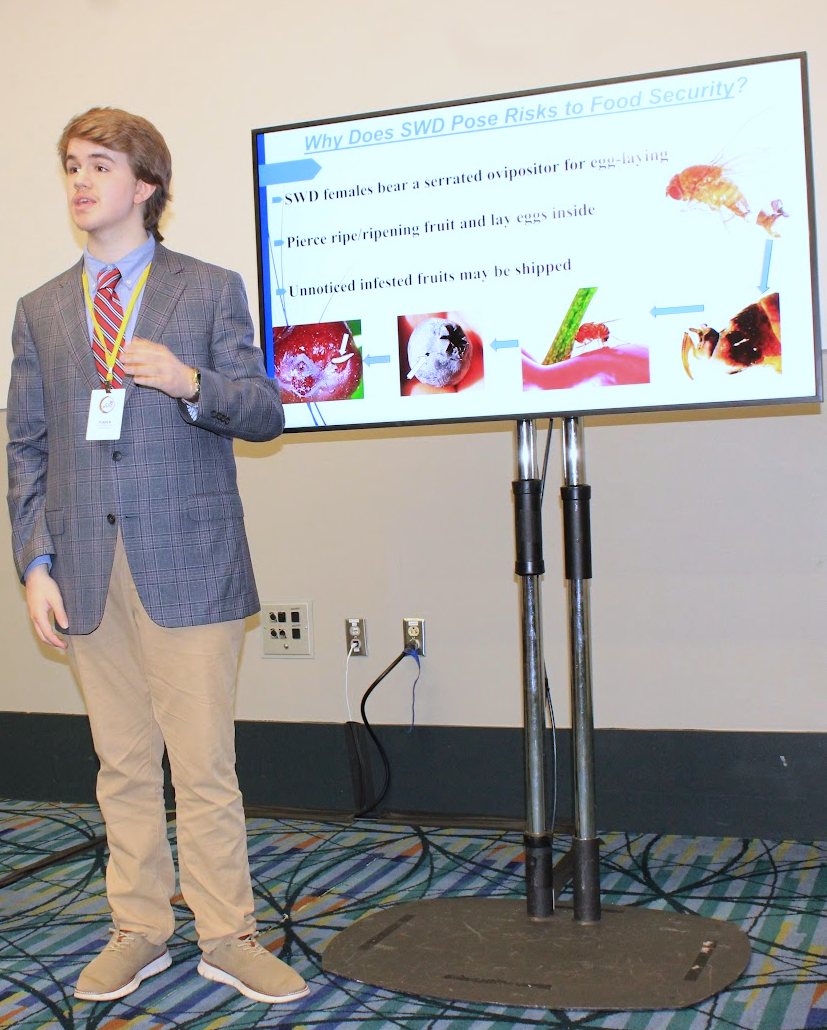
Spotted-wing drosophila, Drosophila suzukii, is an invasive fruit fly. Unlike most fruit flies, the female has a serrated ovipositor that cuts into ripe and ripening berries to lay eggs, so infested fruit can look ready to pick. U.S. losses in small fruit are estimated at $718 million a year (Northeast SARE project LNE22-455R).
Why test methyl benzoate as an insect repellent?
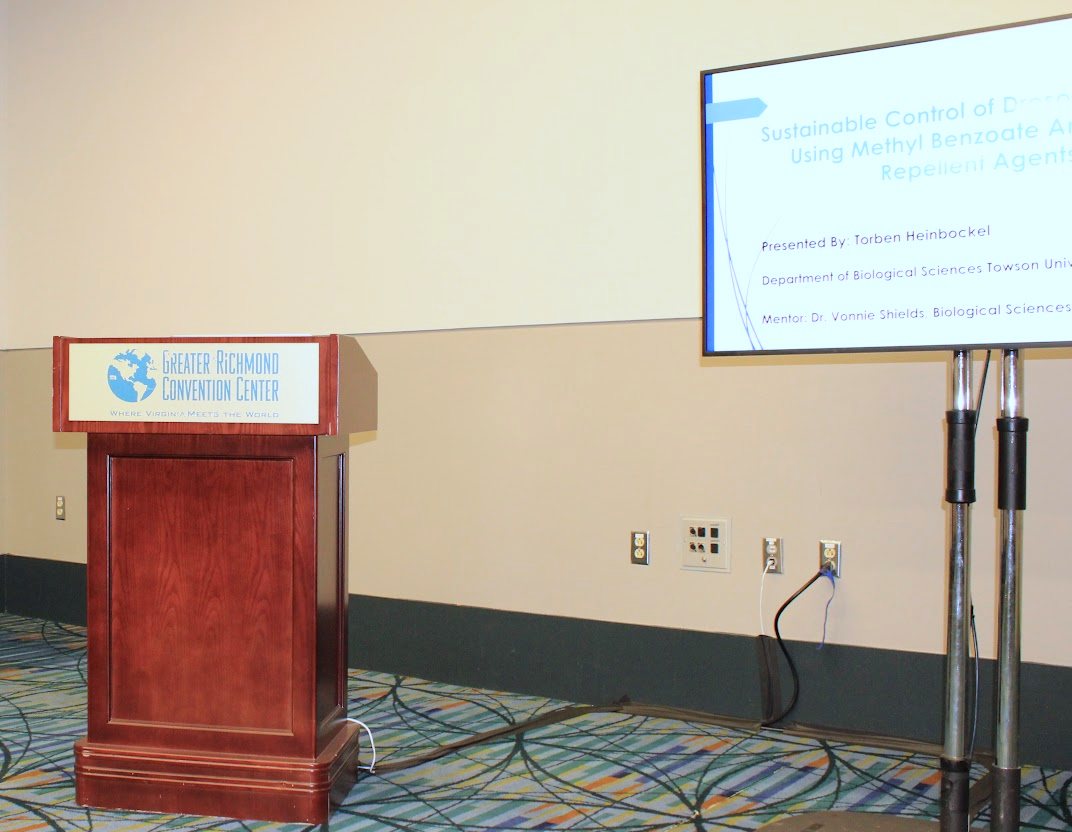
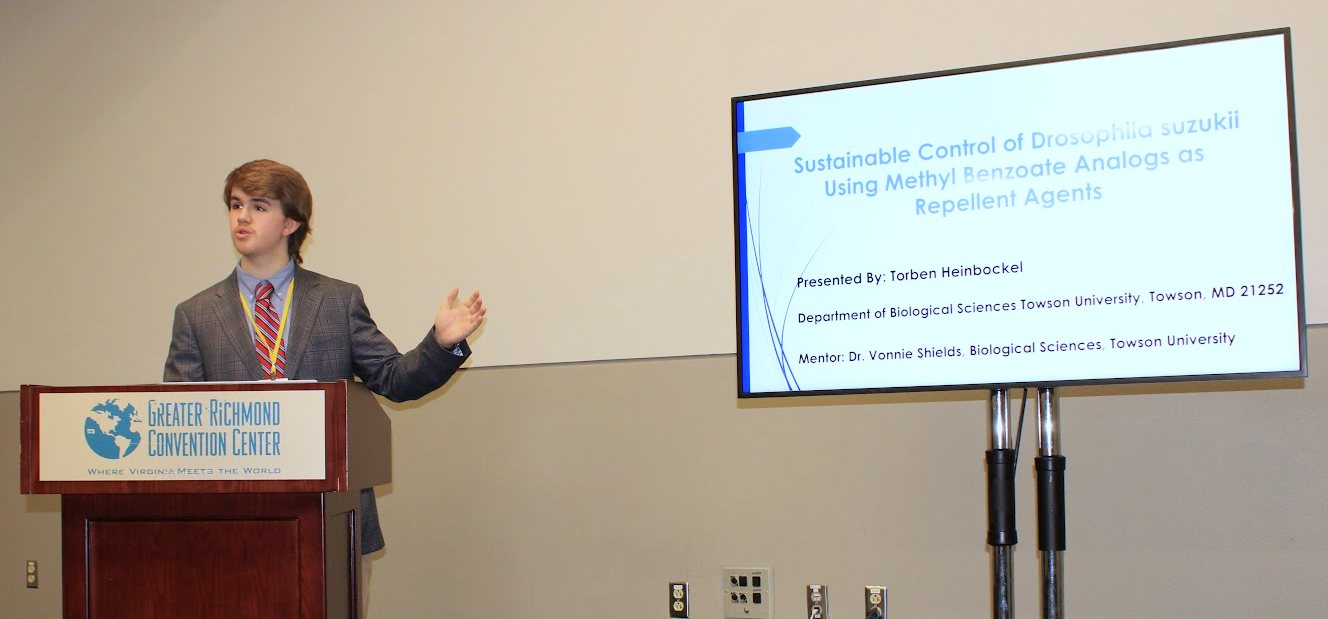
Methyl benzoate is a volatile made by many plants and an FDA-approved food additive, and spotted-wing drosophila avoid it. In a highbush blueberry field trial, methyl benzoate dispensers reduced infestation when fly pressure was very high (Gale et al. 2024). It works only at high doses, so the lab screens structural analogs that may work at lower doses; the first results were presented at NCUR 2026 (Heinbockel and Shields).
Which essential oils repel house crickets?
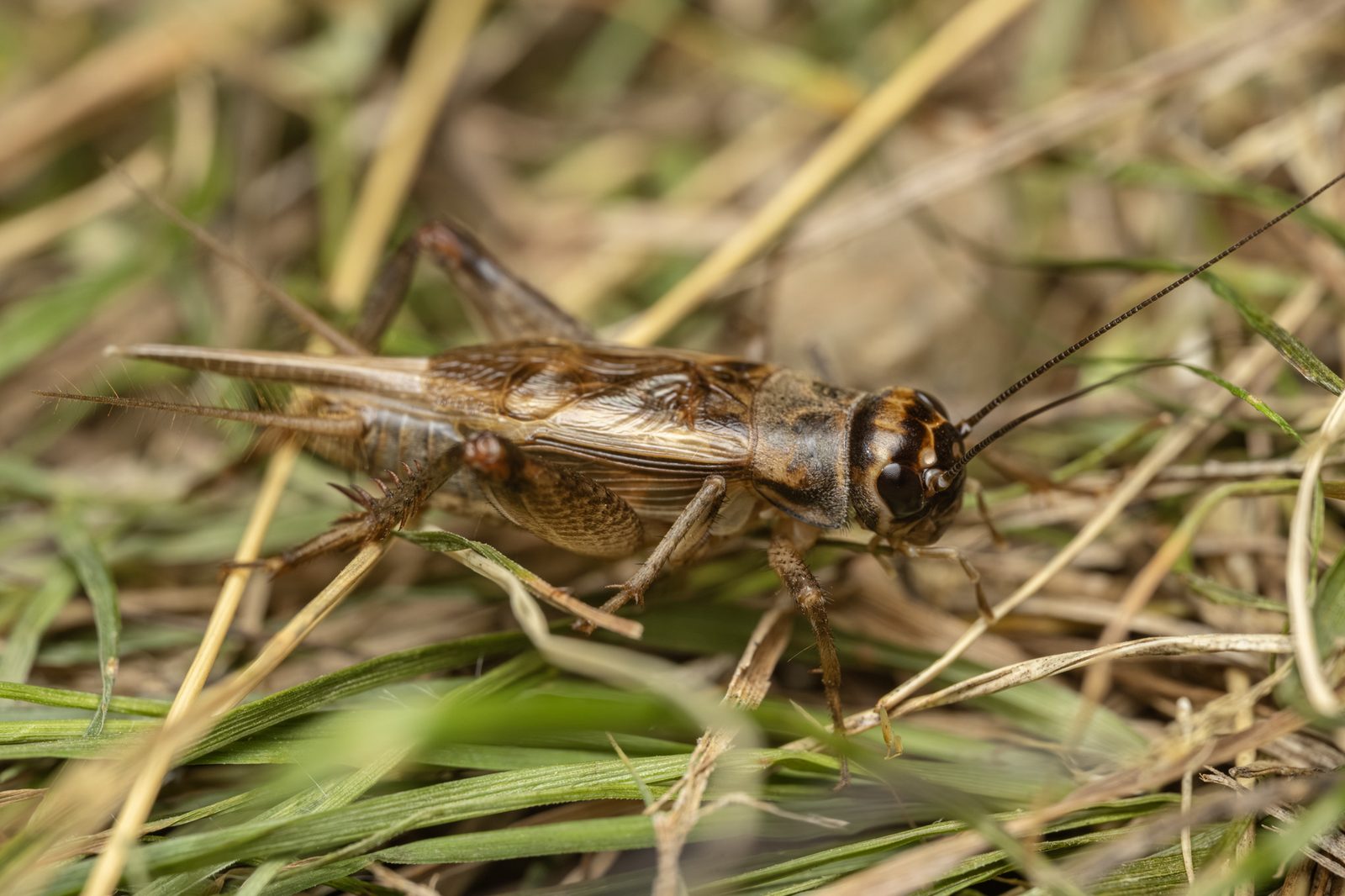
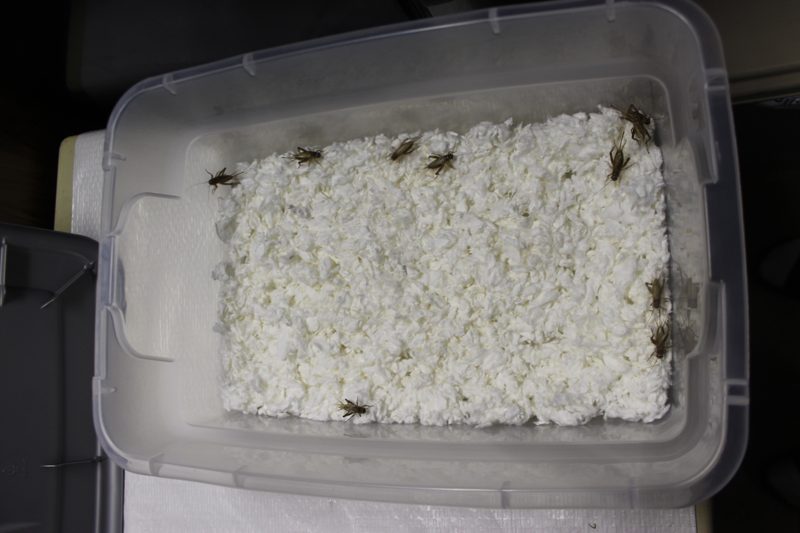
In a screen of 27 essential oils, 14 oils, nearly half, were strong repellents of house crickets, six were moderate, three weak, and four had no significant effect. Four of the strong repellents, peppermint, rosemary, cinnamon and lemongrass oils, were then tested at several doses and repelled more strongly at higher doses, while the synthetic repellents DEET and IR3535 had no significant effect (Heinbockel et al. 2026, Insects 17: 106).
How does a caterpillar taste a repellent?
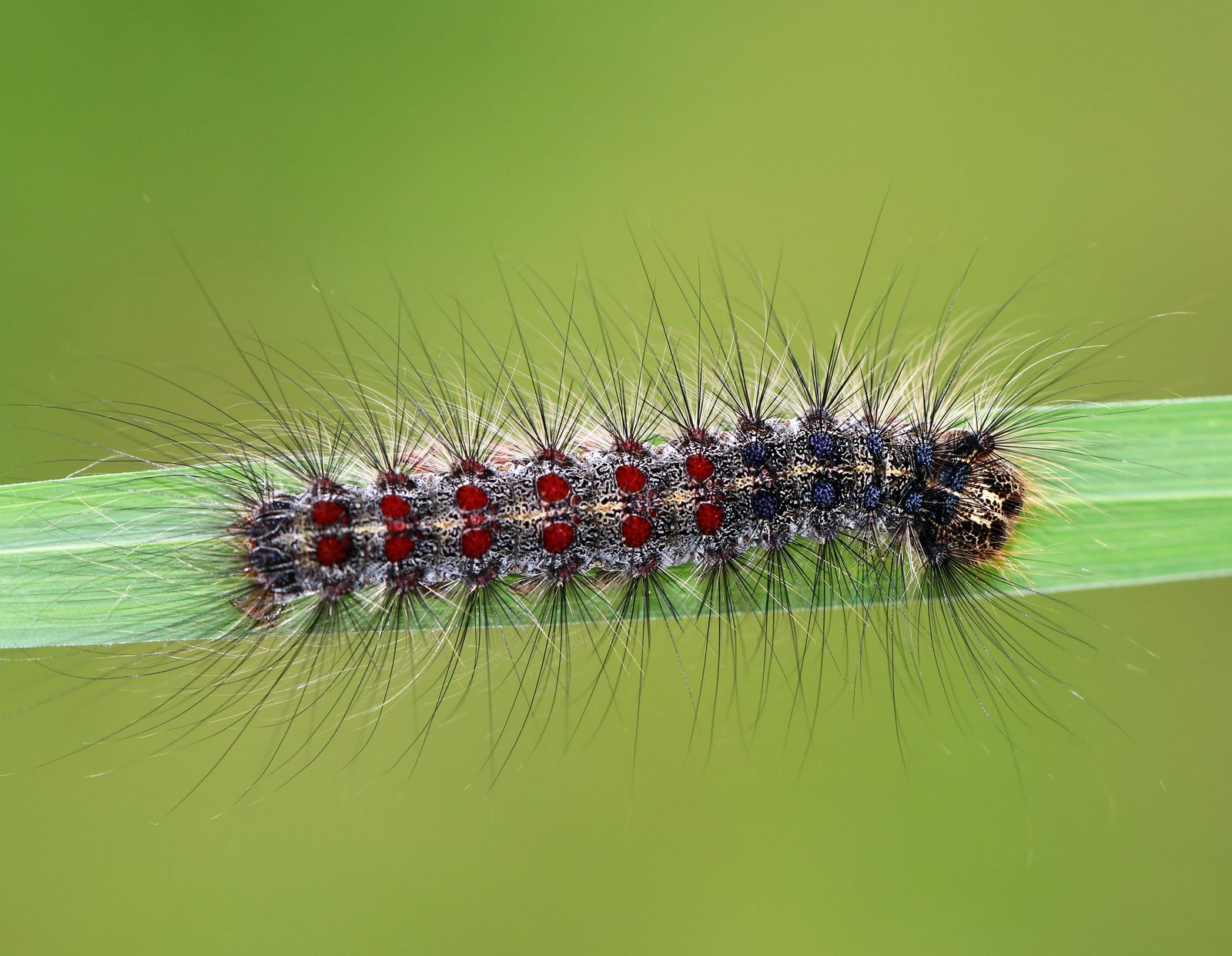
Spongy moth caterpillars taste with styloconic sensilla on their mouthparts. Tip recordings had shown that a deterrent cell in the medial sensillum fires for caffeine and nicotine; the lab then found that the same cell also fires for DEET, IR3535 and picaridin, the first report of insect repellents detected by a caterpillar’s taste cells (Sanford et al. 2014, PLoS ONE).
How can a student join the Shields Lab?
Email Dr. Shields at vshields@towson.edu with your major and year, the projects that interest you, and how many hours a week you can give. Undergraduate, master’s and pre-college students have run projects in the lab and presented them at national meetings.