Shields Lab / Research
Insect taste, smell and repellents
Current work tests plant-derived repellents on spotted-wing drosophila and the house cricket. Earlier work recorded from the taste cells of caterpillars and the olfactory sensilla of moths.
Repellents for spotted-wing drosophila
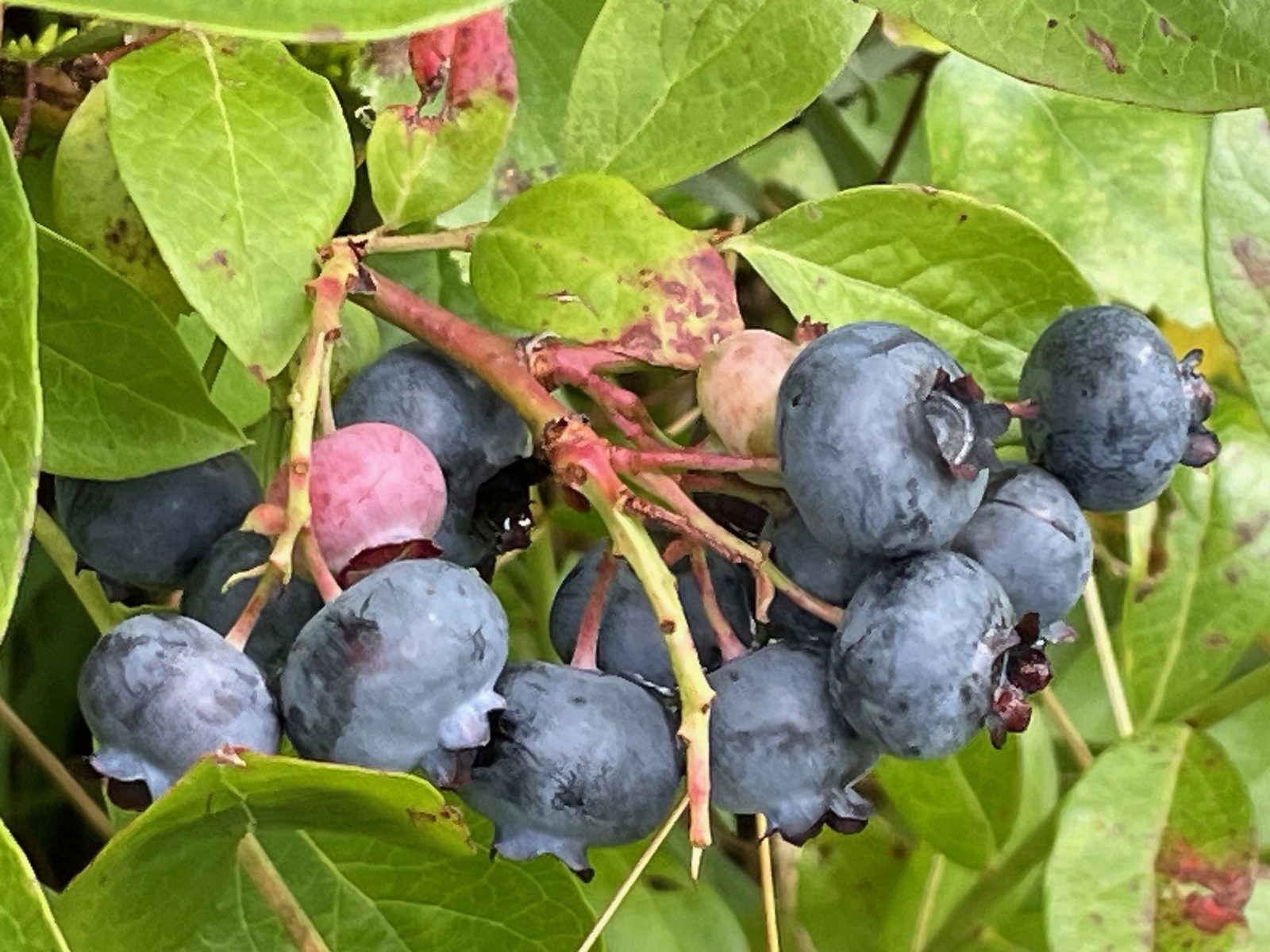
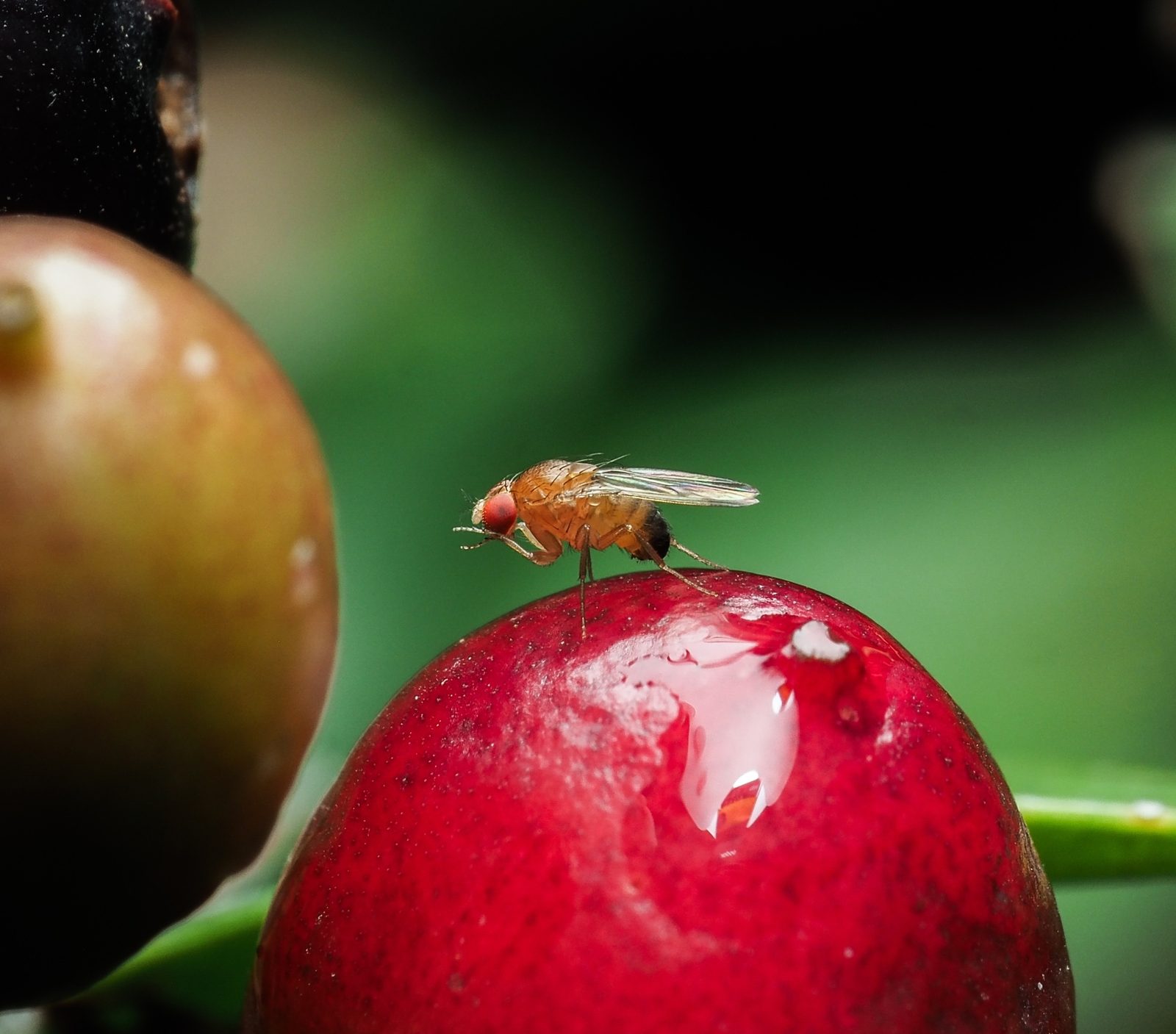
Spotted-wing drosophila, Drosophila suzukii, is an invasive fruit fly. Most fruit flies lay eggs in overripe or rotting fruit, but D. suzukii females have a serrated ovipositor that cuts into ripe and ripening berries, so infested fruit can look ready to pick and be shipped unnoticed. The fly reached the Northeastern United States in 2011, and U.S. losses in small fruit are estimated at $718 million a year (Northeast SARE project LNE22-455R). Growers control it mainly with broad-spectrum insecticides.
Methyl benzoate is a volatile produced by many plants and an FDA-approved food additive, and it repels the fly. In a field trial in highbush blueberry with Rutgers University and the USDA, methyl benzoate dispensers reduced infestation when fly pressure was very high (Gale et al. 2024). The dispensers were the “push” of a push-pull system, which pairs a repellent on the crop with lure traps that pull the pest away; the traps alone did not give comparable protection, and adding them did not improve on the dispensers’ effect.
Methyl benzoate only works at high doses, though, and flies vary in how they respond to it. We are now screening structural analogs that differ from it in the ester group, a ring substituent, or both (Figure 1). Each compound is tested on female flies in a two-choice spatial repellency assay (Figure 2) and ranked by its RD50, the dose that repels half of the flies. Several analogs repelled flies more strongly and more consistently than methyl benzoate at lower doses (Heinbockel and Shields, NCUR 2026). A structure-activity paper is in preparation, and a high-throughput version of the assay that also scores knockdown has been presented at ABRCMS 2025.
Gale et al. 2024, Insects 15(1): 47.
Talks on the analog screen are listed under News.
methyl benzoate
methyl anthranilate
ethyl 4-methoxybenzoate
methyl 2-ethoxybenzoate
Essential oils and the house cricket
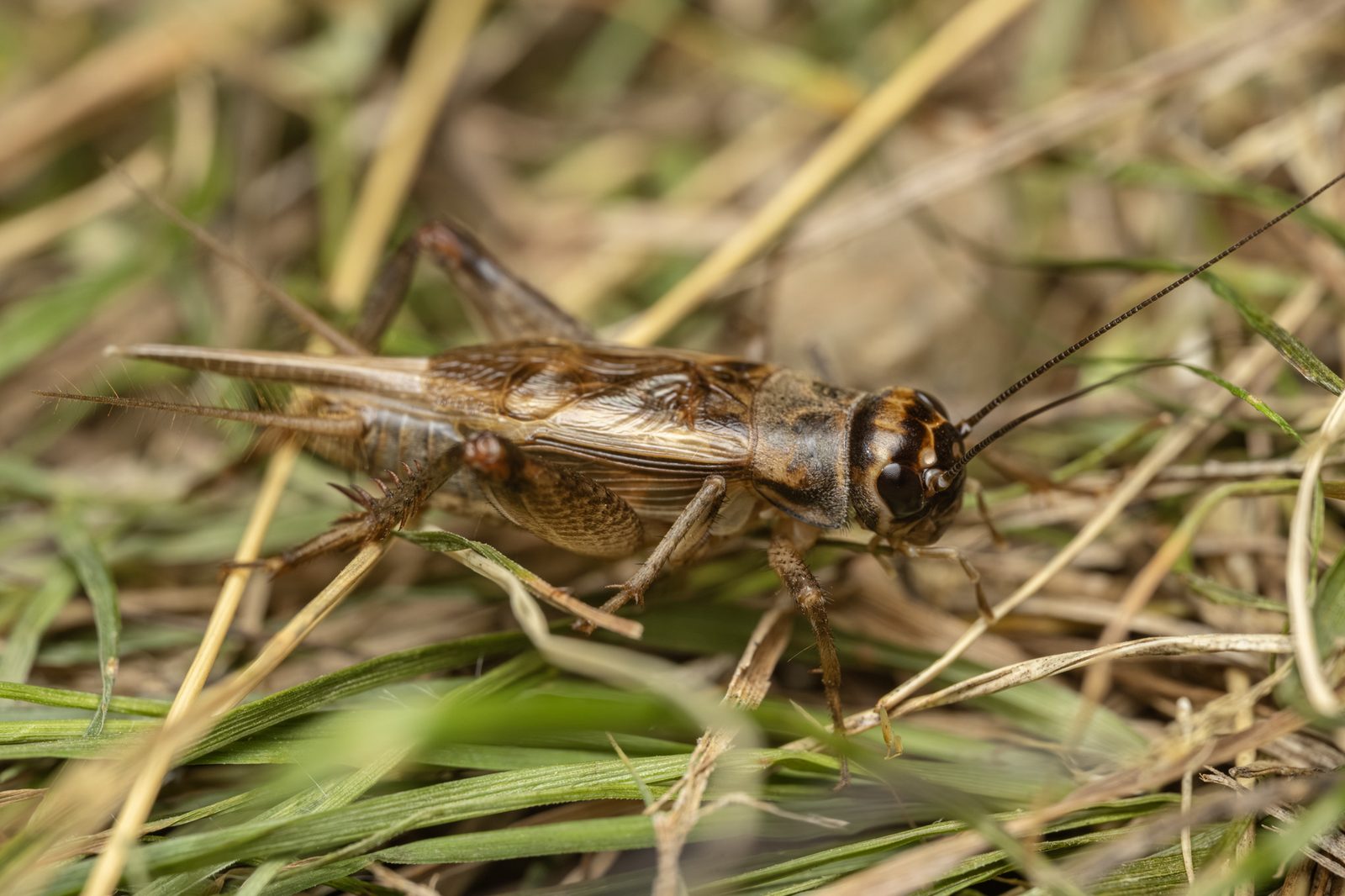
We screened 27 essential oils against the house cricket, Acheta domesticus. The crickets moved freely in an open arena that held a bottle with the oil treatment inside, and repellency was scored from the share of crickets that entered the bottle, with fewer entries meaning a stronger repellent (Figure 3). Four strong repellents, peppermint, rosemary, cinnamon and lemongrass oils, were then tested at four doses and showed a clear dose-dependent effect, while the synthetic repellents DEET and IR3535 had no significant effect. Our 2026 review in Insects covers essential oils as alternatives to synthetic repellents.
Heinbockel, Alzyoud, Raheel and Shields 2026, Insects 17(1): 106.
Heinbockel and Shields 2026, Insects 17(6): 575 (review).
Taste in spongy moth caterpillars
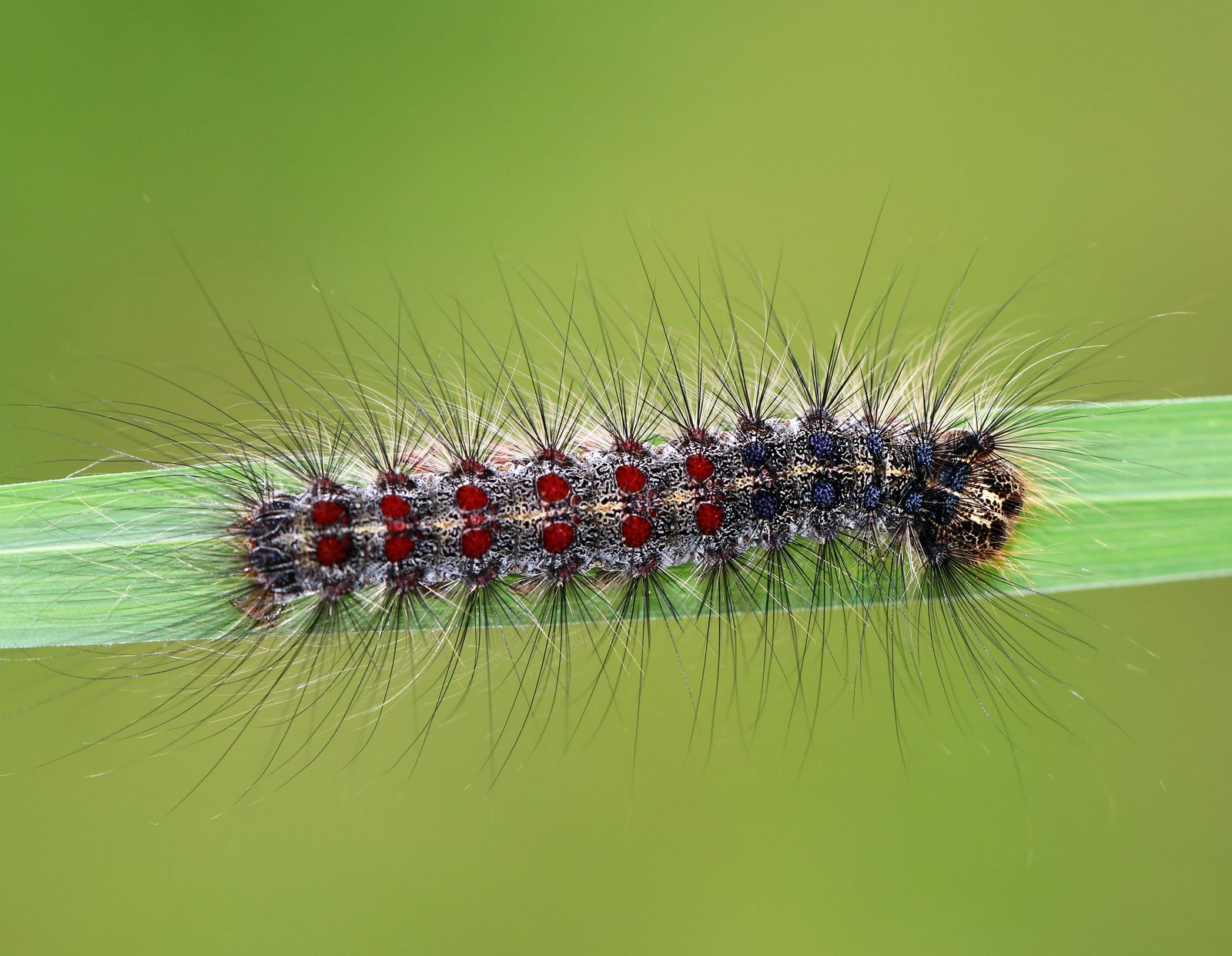
The spongy moth, Lymantria dispar (called the gypsy moth in the lab’s earlier papers), feeds on the leaves of hundreds of tree species. Caterpillars have several kinds of taste sensilla on their mouthparts; the main ones for feeding are two on each galea, the medial and lateral styloconic sensilla, each containing four taste receptor cells (Figure 4). We record from them by tip recording, in which a glass electrode filled with the stimulus solution is placed over the sensillum tip; the same electrode delivers the stimulus and records the cells’ action potentials.
These recordings identified cells that respond to sugars, salt, inositol and plant alkaloids (Table 1). One cell in the medial sensillum, the deterrent cell, responds to caffeine, nicotine, strychnine and aristolochic acid, and also to salt (Martin and Shields 2012b); sucrose and inositol, which stimulate feeding, suppress its response (Martin and Shields 2012a). The same cell responds to the insect repellents DEET, IR3535 and picaridin, and each of them deterred feeding. This was the first report of insect repellents detected by a caterpillar’s taste receptor cells (Sanford et al. 2014).
Martin and Shields 2012a, Arthropod-Plant Interactions 6: 259–267.
Martin and Shields 2012b, Arthropod-Plant Interactions 6: 519–529.
Sanford et al. 2014, PLoS ONE 9(6): e99924.
| Stimulus | Responding cell | Effect on feeding | Source |
|---|---|---|---|
| Sucrose | Sugar-sensitive cell | Stimulates | Martin and Shields 2012b |
| Inositol | Inositol-sensitive cell, medial sensillum | Stimulates | Martin and Shields 2012b |
| Caffeine, nicotine, strychnine, aristolochic acid | Deterrent cell, medial sensillum | Deters | Shields et al. 2008; Martin and Shields 2012b |
| Potassium chloride (salt) | Two cells in each sensillum, weakly; in the medial sensillum one is the deterrent cell | Not tested | Martin and Shields 2012b |
| DEET, IR3535, picaridin | Deterrent cell, medial sensillum | Deters | Sanford et al. 2014 |
Brown marmorated stink bug
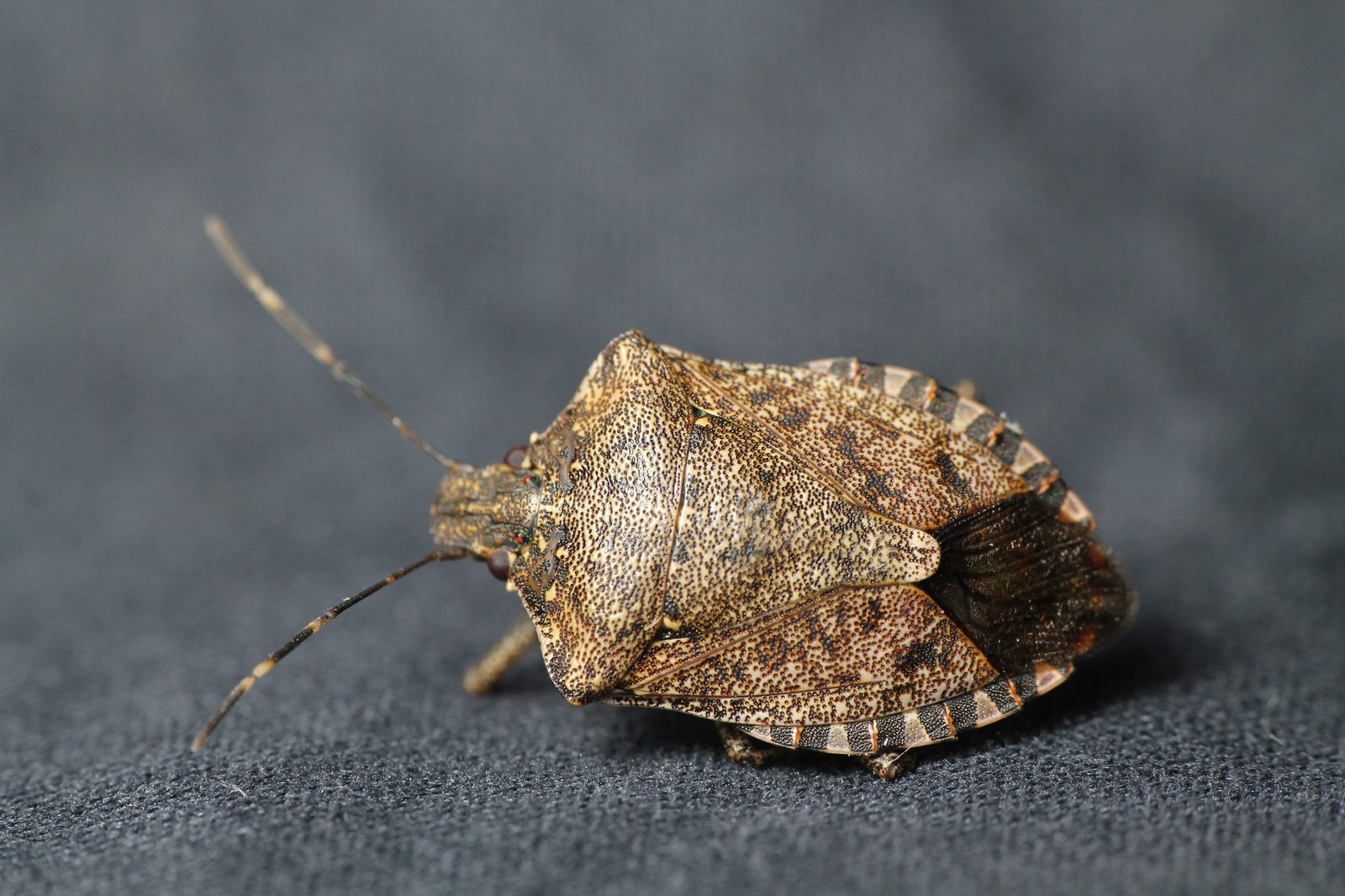
In 2017 the lab received a $150,000 grant from the USDA for work on the brown marmorated stink bug, Halyomorpha halys, with USDA research chemist Aijun Zhang and research associate Nicholas Larson. The project set out to collect volatiles from the bugs and to test candidate attractants, feeding deterrents and repellents in electrophysiological and behavioral assays, to help design better traps (Towson University News, September 2017).
Olfaction in Manduca sexta (earlier work)
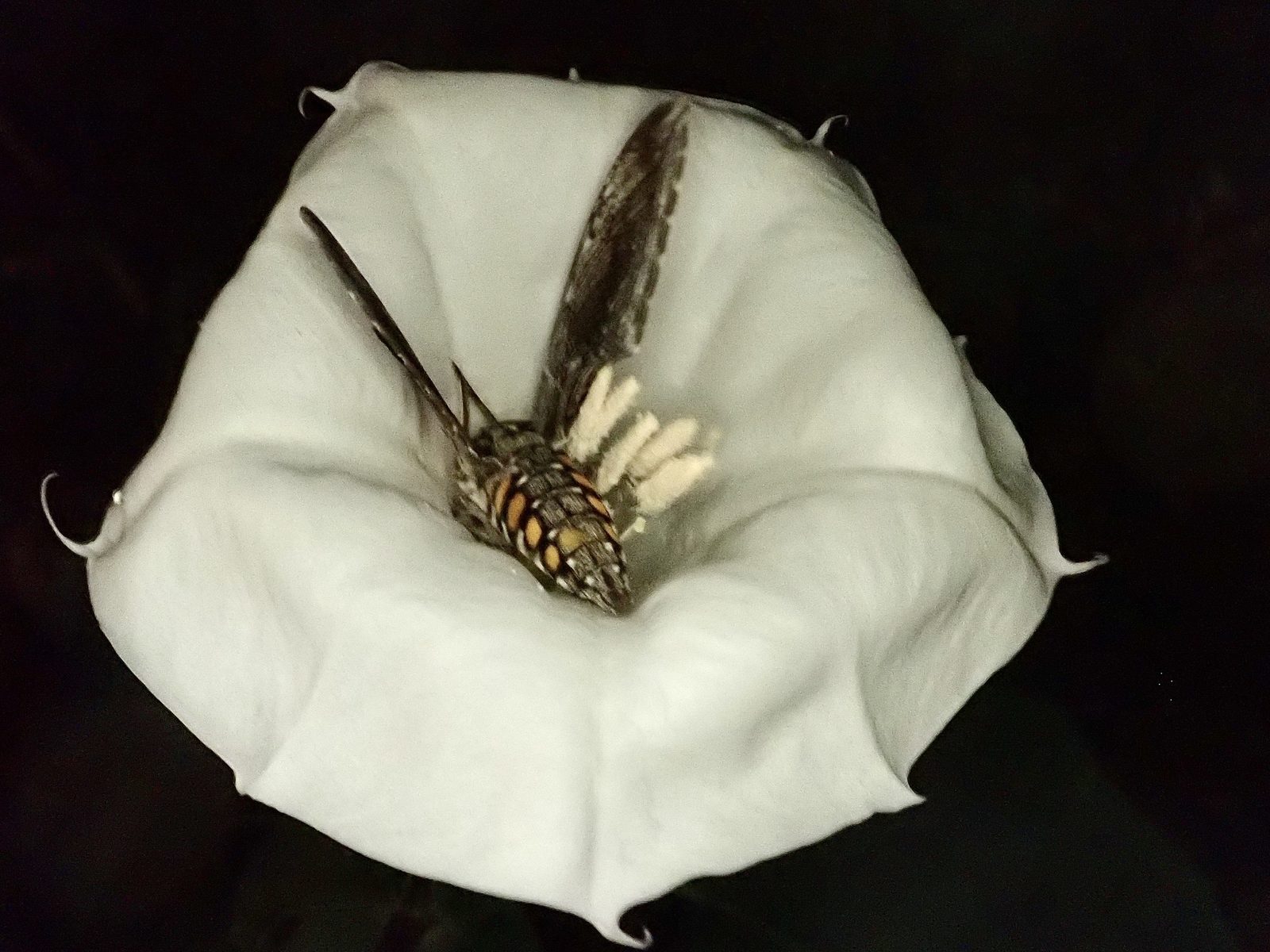
Dr. Shields’s work with John G. Hildebrand of the University of Arizona described eight types of sensilla on the antenna of the female tobacco hornworm moth, Manduca sexta. Recordings from single type-A trichoid sensilla, using a panel of 102 volatile compounds and three plant-derived odor mixtures, sorted these sensilla into three functional types.
Shields and Hildebrand 1999a, b, Canadian Journal of Zoology 77: 290–313.
Shields and Hildebrand 2001, Journal of Comparative Physiology A 186: 1135–1151.
Shields and Hildebrand 2001, Microscopy Research and Technique 55: 307–329 (review).
Study organisms
| Species | Common name | Order, family | Stage studied | Work |
|---|---|---|---|---|
| Drosophila suzukii (Matsumura) | Spotted-wing drosophila | Diptera, Drosophilidae | Adult females | Repellency of methyl benzoate and analogs |
| Acheta domesticus (L.) | House cricket | Orthoptera, Gryllidae | Adults | Repellency of essential oils |
| Lymantria dispar (L.) | Spongy moth | Lepidoptera, Erebidae | Larvae (galea) | Taste receptor cell responses to alkaloids, sugars and repellents |
| Halyomorpha halys (Stål) | Brown marmorated stink bug | Hemiptera, Pentatomidae | Adults | Volatiles, attractants and repellents (USDA-funded project) |
| Manduca sexta (L.) | Tobacco hornworm moth | Lepidoptera, Sphingidae | Adult females (antennae) | Antennal olfactory sensilla and plant volatiles |
Methods
- Morphology
- Microscopy of antennae and mouthparts to identify, count and describe sensilla.
- Electrophysiology
- Tip recording from taste sensilla; single-sensillum and antennal recordings for olfaction.
- Behavior
- Two-choice spatial repellency and knockdown assays with flies, bottle-entry assays with crickets, and feeding assays with caterpillars, each run across a dose series with a solvent control. Fly repellency is summarized as the RD50 and compared with t-tests or one-way ANOVA.